Regis Technologies has announced a new capability of Solid State Chemistry. The Solid State Chemistry service will provide salt, cocrystal, and polymorph screening and selection activities to provide suitable crystallization processes during all development phases for Regis' Custom Pharma clients. Solid State Chemistry Director Dr. Ronald L. Mueller has developed a dedicated lab with state-of-the-art equipment for a team of solid state chemists and is now accepting projects.
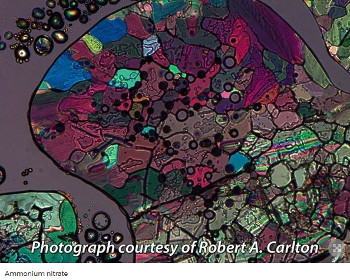
Small molecule drug substances, when in the solid phase, could exist in different molecular arrangements and/or conformations within the crystalline lattice. These solid state forms are called polymorphs and exhibit polymorphism. Most organic molecules have the propensity to exhibit polymorphism. Drug substances with no molecular order in the solid phase are considered amorphous. They may also contain solvents and/or water in stoichiometric or non-stoichiometric amounts. These forms are also considered polymorphs of that drug substance. In the truest sense, polymorphs have the same molecular composition with different crystalline arrangements.
Different polymorphs have different physicochemical properties, e.g., spectroscopic, surface chemistry (solubility and stability), crystal habit or morphology (particle shape), packing, kinetic, thermodynamic, mechanical, etc. Sometimes these solid state properties may affect dissolution (a solid dissolving into a liquid medium) and/or bioavailability (i.e. the proportion of a drug in the body that has a physiological effect) of a drug product. Chemical and/or physical properties of the API known to affect the physiological and/or pharmacological activity of a drug product require specific tests, along with appropriate specifications for drug substances and/or products, to ensure the safety and efficaciousness of the drug products.
Since different polymorphs have different physicochemical properties, identifying a viable polymorph early during the drug development process reduces time to market and costs. Knowledge about the drug substance and drug product increase cumulatively during the development phase of the drug. By the time of the NDA or ANDA submission, the following must be known about the solid state properties of an API: (1) whether it exhibits polymorphism, (2) do multiple polymorphs exist and do the undesired polymorphs affect dissolution and/or bioavailability, and (3) whether various particle size distributions of the material influence dissolution and/or bioavailability of the drug product. Information about all polymorphs, including solid state properties relevant to the manufacturing process of the drug substance and drug product, must be understood. If required, appropriate tests and specifications for relevant polymorphs must be established for the drug substance and/or drug product.
If an API does exhibit polymorphism, it is critical to understand if the undesired polymorphs adversely affect the dissolution and/or bioavailability of the desired polymorph. It is also important to understand if there is any potential that the desired polymorph would change during manufacturing and/or storage of it, e.g. different polymorph, particle size distribution and/or chemically. Identifying the most thermodynamically stable polymorph is routinely the objective for Solid State Chemistry screening activities.