Outsourcing of key processes to contract development and manufacturing organisations (CDMOs) is increasingly common within the pharmaceutical industry, as pharma and biotech organisations look to reduce costs, minimise risk and accelerate drug discovery. However, with up to two-thirds of all spending on clinical trial materials routed through outsourced manufacturing partners, appointment of a CDMO that doesn’t fit the project’s requirements or bring appropriate expertise can be a costly mistake.1
While the term “CDMO” is very general, there is considerable variation between each CDMO provider, with each bringing a unique combination of geographical location, core expertise, cost, modes of working, culture, size and attitude towards compliance and regulation. All these aspects impact upon the final output delivered to a client and affect the client’s overall experience with the outsourcing process. Choosing the most appropriate CDMO for your project can be challenging and making an uninformed or inappropriate selection may be the difference between success and failure. This article highlights key factors to consider when seeking the ideal expert CDMO partner for an early-phase outsourcing project.
Defining the Term “Partnership”: The Fulfilment Gap
Partnership [noun]: a relationship in which two or more people or organisations work together in a business venture2
In many cases, the relationship between a CDMO and their client, usually a pharmaceutical or biotech company, goes beyond a mere transaction. Both parties want a project to succeed, putting significant time and resources into achieving this goal. Consequently, it has become increasingly common for CDMOs and their clients to think of themselves as being in “partnership.” However, a recent survey of the relationships between late-stage CDMOs and pharma, including emerging biotechs and established pharmaceutical companies, revealed that while both parties considered partnerships important, there were stark differences in their definition and understanding of this term, leading to a significant “fulfilment gap.”3
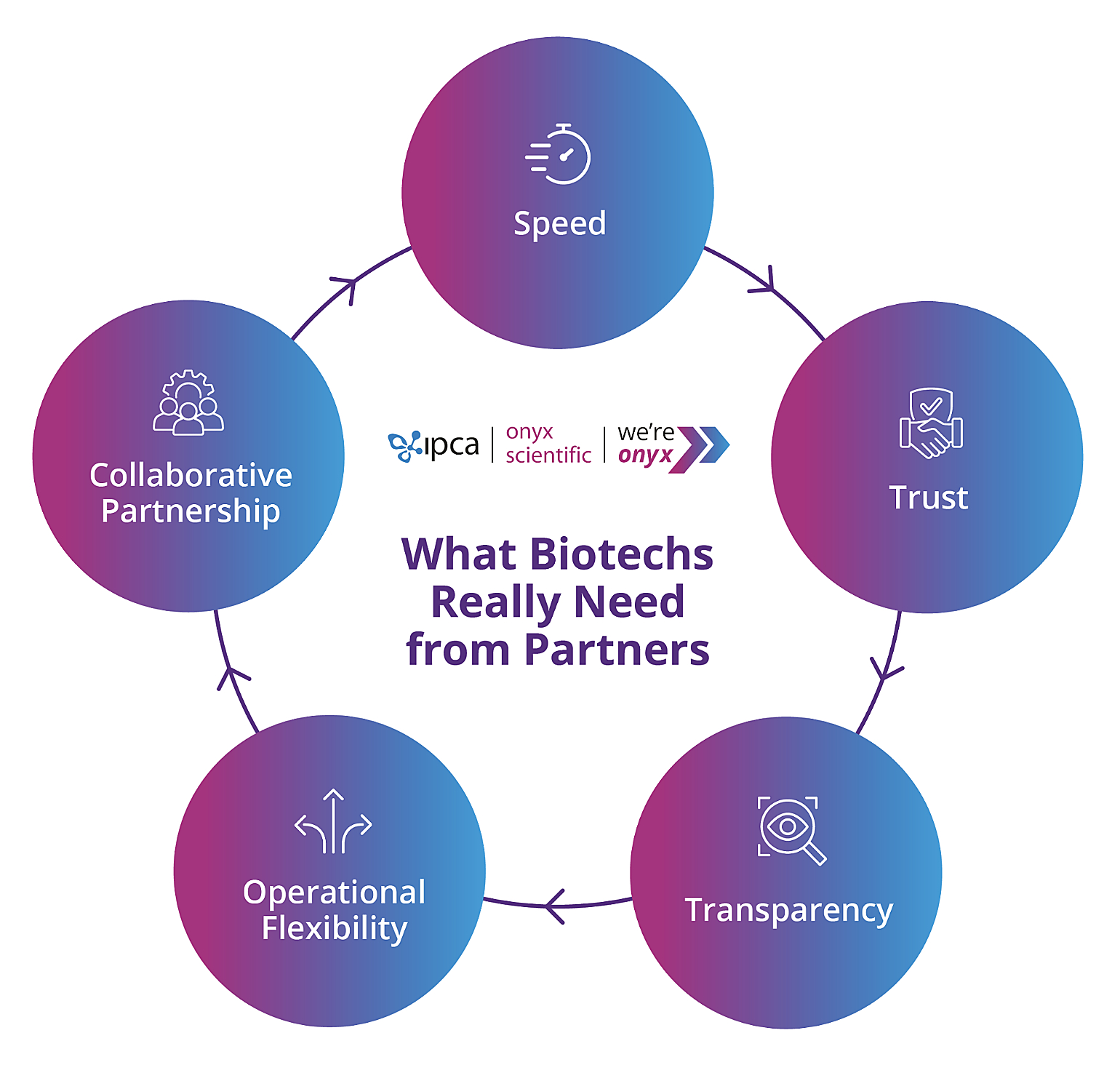
Overall, both pharmaceutical and biotech respondents broadly agreed that a true strategic partner should have “high levels of trust, transparency and open communication,” which was followed by implementation of “long-term planning” and alignment of “shared strategic objectives.” However, beyond this, many CDMOs did not meet clients’ expectations, with the largest gaps primarily related to time and money, including pricing models, meeting deadlines, cost-effectiveness, and manufacturing scalability. It should be noted, however, that while the respondents of this survey were mainly those working in late-phase and commercial production rather than early-phase, the lowest alignment in expectations of the term “partnership” was between established pharmaceutical companies and CDMOs rather than emerging biotechs.
Managing Expectations: Alignment on Deliverables and Costs is Crucial
Reality not meeting expectations is clearly a pivotal issue, especially within an industry where regulation and compliance are tightly controlled. Setting out clear aims, objectives and key deliverables early enables solid foundations to be laid and ensures both parties are aligned upfront, which is vital if the ultimate goal is regulatory approval.
While pricing models and cost-effectiveness may be more difficult to address due to confidentiality and personal subjectivity, costs are certainly an important aspect for consideration, and it’s often the case that cheaper is not always better. As John Ruskin said, “It’s unwise to pay too much, but it’s worse to pay too little. When you pay too much, you lose a little money – that’s all. When you pay too little, you sometimes lose everything, because the thing you bought was incapable of doing the thing it was bought to do.” In pharmaceutical terms, paying too much may result in a smaller profit or require another funding round a little earlier. Paying too little could result in project failure or even cause loss of the company. While it is highly unlikely that a CDMO sets out to do a poor job, it is often the case that “you get what you pay for.”
The Difficulty with Deadlines
Pharmaceutical development is an incredibly resource-intensive and time-consuming process. Investors want returns, the client has key milestones and the CDMO must deliver the goods. Discussions relating to timelines should not be reserved for when contracts are signed. During the procurement process, asking questions around deadline feasibility is extremely important: a CDMO that offers a counter-opinion or rebuttal to a timeframe is using their experience and expertise to ensure that the client’s interests are looked after and expectations are managed effectively and this should therefore be seen as a positive rather than a negative. The CDMO can also help with milestone planning, for example ensuring toxicity screening is booked at an appropriate time-point, often avoiding unnecessary spend if timelines do slip, or they may suggest developing a future-proofed route for delivery of larger quantities of material.
Manufacturing Scalability: Phase-Appropriate with Horizon-Scanning
Worldwide, a broad range of CDMO partners are available, with some specialising in a specific aspect, for example early-stage drug substance development, and others offering a full end-to-end service. Using end-to-end providers can be tempting, as they may provide more confidence around project management and logistics, for example reduced shipping between drug substance and drug product sites, or easier method transfers. However, larger end-to-end CDMOs may lack flexibility, which can be vital for early-stage development where objectives and priorities can change quickly.
One of the many benefits of a small CDMO is agility, alongside faster responsiveness to queries and client input. Many also offer phase-specific expertise and, in some cases, have existing relationships with other small, highly specialised CDMOs. For example, a drug substance (DS) manufacturer may regularly collaborate with a drug product (DP) developer across many different clients, meaning that established relationships between CDMOs can be exploited, adding value and depth. Furthermore, engaging a small CDMO with expertise ranging from early process R&D through to commercial manufacture can be lucrative: rather than developing a route focused solely on the current phase, these CDMOs will use a phase-appropriate approach, ensuring that the route is both scalable for future operations and meets regulatory requirements.
Flexible Yet Resilient: Weathering Global Headwinds
In recent years, worldwide events have undoubtedly made pharmaceutical development and manufacture more challenging. The COVID-19 pandemic, alongside recent unexpected geopolitical shifts, has clearly highlighted that supply chains are a significant bottleneck in the pharmaceutical industry. The ability to endure supply interruptions has, therefore, become highly prized by the pharma and biotech sectors, and supply-chain resilience is increasingly a topic of initial discussions. CDMOs should ensure that robust supply processes are used to mitigate against unforeseen interruptions, and potential clients should consider the geographical location of CDMO partners to protect against external, uncontrollable geopolitical factors.
Alongside this, the importance of sustainability and changing regulations, such as the proposed PFAS restrictions in the EU, and their impact on supply chain logistics and product delivery is of increasing concern. In addition to supply chain resilience and geographical considerations, ensuring a CDMO partner has a strong grasp of upcoming regulatory changes and environmental considerations is also vital.
Communication and Transparency for Clear Objectives
Clear and open communication between both client and service provider, as well as honesty, are non-negotiables. The quality of communication during the procurement process, or “honeymoon period,” is extremely important and will feed into the client’s final decision, either consciously or subconsciously. If red flags are observed during the procurement process, such as slow responses to queries or a lack of clarity around key processes, other concerns may be raised around a particular provider. Setting clear communication expectations during the “Request for X” (RFx) process reduces ambiguity and leads to more aligned expectations between the CDMO partner and client.
Challenges during projects are a fact of pharmaceutical development, usually impacting timelines, costs, and/or deliverables. How the CDMO partner responds to issues is crucial, and communicating with honesty and transparency is a foundational pillar of the client–provider relationship. Any good CDMO should welcome questions around how it handles communication when things go wrong, and direct access to their technical teams should be as a matter of course. However, communication may extend beyond the CDMO and client: it can sometimes encompass other small CDMOs and may incorporate specialist consultants. Facilitating direct communication between all parties can save significant time and resources, allowing potential issues to be addressed quickly and fostering a more collaborative environment.
In fact, good communication can be aided by the use of a consultant. While this may be perceived as expensive in the short term, longer term the advantages should be borne out with more flexible and scalable process development, as well as using the lessons learned by others. A good consultant, almost always selected by the client, can project-manage the CDMO, acting as a set of eyes and ears on the ground by ensuring that the client’s best interests are always put first, while also providing expertise across aspects of the drug development process. This approach is especially applicable to small biotechs, where the scientific team may be very small and lack the time or expertise to lead a large-scale manufacturing project. In combination with the CDMO, the biotech’s outsourcing team and designated consultant can devise a strategic approach to progressing an asset through the Chemistry, Manufacturing and Controls (CMC) process.
CDMO Procurement Process: A Team-Based Exercise
The final aspect to consider when looking for a suitable CDMO partner is who should make the final engagement decision on the client side. The Pharma Procurement Playbook: A Guide to Supplier Selection suggests that best practice is the formation of a selection team.4 Restricting RFx discussions to an individual, or a single specialist function, on the client side may lead to blind spots when compared to team-based decision-making. For example, if an R&D leader makes the decision, selection may be more heavily weighted towards scientific aspects, but considerations such as supply risk or long-term strategy may be neglected. Alternatively, if procurement takes the lead on CDMO selection, focus may be on cost with little regard for technical capabilities, quality assurance processes, or cultural fit.
Having a team set out key expectations and requirements of a CDMO partner generally leads to a more robust and sound decision, with a greater likelihood of success. A well-balanced multi-disciplinary team should be formed, comprising representatives from procurement, quality assurance, technical operations, supply chain, regulatory, legal and finance, all of whom bring unique perspectives to ensure optimal fit. While there is greater risk of indecision with more stakeholders, avoiding siloes is important. Ensuring all decision-makers are clear on their role within the RFx stage can avoid costly delays, reworks or, in the worst-case scenario, project failure.
Key Takeaway: All Parties Need Clearly Defined Roles
The CDMOs that bridge the fulfilment gap and truly become partners are likely the best choice for biotechs and pharma looking to develop their early-stage asset. While most CDMOs are well-versed in providing services with regular communication, sharing strategic objectives with clients, and ultimately providing the final material, it’s the “above and beyond” CDMOs that provide the real added value. Consistently meeting deadlines, addressing manufacturing scalability and compliance, building in flexibility and resilience as standard and ensuring clear, transparent, honest, and regular communication, even when processes go wrong, are the providers prized by clients.5
The partnership with a CDMO begins well before the contract is signed, with a good CDMO adding value to an asset from the outset, during the RFx stage. The procurement process is fundamental and relies upon the prospective clients – those biotech and pharma companies seeking a CDMO partner – to ensure that blind spots in decision-making are minimised. Recommended best practices include forming a panel of decision-makers to select the “right fit” CDMO, and clearly defining key partner requirements, discussed and agreed up front in the RFx and Scope of Works documentation.
With many different aspects to consider and evaluate before taking the leap, it is important not to underestimate your gut instincts. A cultural fit between the client and CDMO of choice is vital for a successful partnership, and a “good” decision is critical. CDMO selection can be the difference between project failure and bringing new treatments closer to the patients that need them – the shared goal for all working in drug discovery.
References
- Miller J. Sizing up the CDMO market. Pharmaceutical Technology. 2009; 33(10) 132. https://www.pharmtech.com/view/sizing-cdmo-market-0
- Collins English Dictionary, 2016
- Partnerships for an Uncertain World, CDMO Live Europe 2026. https://pharmasource.global/content/ebooks/report-cdmo-live-europe-2026/
- Pharma Procurement Playbook: A Guide to Supplier Selection [eBook], PharmaSource. https://pharmasource.global/content/ebooks/pharma-procurement-playbook-a-guide-to-supplier-selection-download/
- Radomsky M. The Mistakes That Kill Drug Programs. PharmaSource. https://pharmasource.global/content/expert-insight /cmc-pharmaceuticals-mike-radomsky-on-the-mistakes-that-kill-drug-programs/
About the Author
Chris Atherton joined Onyx Scientific in 2002 following completion of a PhD in synthetic organic chemistry and has developed a wealth of experience in process development, scale-up and GMP regulatory matters through his roles as a development chemist and Team Leader. Latterly, he has moved into managerial and leadership roles, including Commercial Director, and is responsible for all commercial operations at Onyx, such as business development, marketing and ensuring high levels of service for clients.