The Scientific Gap
Environmental monitoring (EM) activities are often treated as interchangeable when sampling methods, locations, or classification limits appear similar. The reasoning is intuitive: if the technique is comparable and the alert threshold is the same, one activity can stand in for another. In practice, this creates a scientific gap – the data may be valid, but not representative of the contamination control decision they are used to support.
Not all acceptable EM data are decision-relevant EM data.
Monitoring programs in sterile manufacturing frequently evolve around schedules, frequencies, and classified areas without an explicit record of what contamination control question each activity is designed to answer. When that record is absent, substitution decisions may be made on operational grounds rather than scientific ones.
This article proposes that environmental monitoring activities should be defined and justified by the contamination control question they answer, rather than by their sampling method or classified location. EU GMP Annex 1: Manufacture of Sterile Medicinal Products1 requires a contamination control strategy (CCS) that is risk-based and scientifically justified. Within this framework, defining the specific contamination control question that each monitoring activity is intended to answer provides a practical basis for determining whether the resulting data are representative of the decision being supported. The fundamental unit of environmental monitoring is not the sampling activity. It is the contamination control question.
What Each Monitoring Activity Is Designed to Answer
Table 1 summarizes how common environmental monitoring activities differ in the contamination control questions they address, the operational states they evaluate, and the quality decisions they support.
Table 1. Decision-Based Framework for Environmental Monitoring |
|---|
Monitoring Activity | Contamination Control Question | Operational State Evaluated | Quality Decision Supported |
|---|
Qualification Monitoring | Can this environment achieve and maintain the required classification? | At-rest or in-operation under defined qualification conditions | Classification and qualification of the environment; support for operational readiness |
Routine Dynamic EM | Is the manufacturing process currently operating under controlled conditions? | Occupied, during production, representative of routine process | Ongoing assessment of environmental state of control; support for batch disposition |
Static / At-Rest Monitoring | What is the baseline microbiological condition of the cleanroom in the absence of process activity? | Unoccupied, post-cleaning, prior to production start | Baseline environmental condition; support for assessment of cleaning and disinfection effectiveness |
Shutdown / Recovery Monitoring | Has environmental restoration returned the area to an acceptable condition following a shutdown? | Post-shutdown, post-cleaning, pre-restart | Assessment of environmental recovery; support for production restart |
APS Monitoring | Were the aseptic operations performed under conditions representative of routine microbiological risk? | Simulated production, representative interventions, full-scale run | Aseptic process simulation; support for aseptic process qualification |
Investigation EM | What is the probable source or pathway of a detected contamination event? | Targeted, post-event, designed around identified risk | Deviation investigation; root-cause assessment; CAPA development |
Each row represents a distinct contamination control question and a distinct quality decision. Data generated by a monitoring approach designed to answer one question should not automatically be assumed to answer a different question, even when sampling methods, alert limits, and room classification are identical. Technical similarity between activities alone does not demonstrate that they provide equivalent information when the underlying questions differ.
Representative – of What, Exactly?
The concept of representativeness is important to the risk-based monitoring principles described in Annex 1,1 but what monitoring is intended to represent is not always explicitly defined.
Representative does not mean representative of the room. Representative does not mean representative of the sampling location.
Representative means representative of the contamination risk being evaluated.
Representativeness is not an inherent property of a monitoring result. It is determined by the contamination control question that the result is intended to support.
A surface contact plate collected after cleaning provides information about the microbiological condition of the sampled surface following disinfection; it does not simultaneously address whether the aseptic process operated under controlled conditions. The same data point answers a different question in each context. When a monitoring approach designed for one question is applied to a different question – without demonstrating that both address the same contamination risk under equivalent process conditions – the resulting data may be technically valid but not sufficiently representative of the decision they are being used to support.
The question to ask about any monitoring result is not: “Is this result acceptable?” The question is: “Is this result representative of the contamination risk associated with the question it is being used to answer?”
Why Substitution Is Not Automatic
Substitution requires explicit justification because the contamination risk profile of a manufacturing environment is not constant.2
Contamination sources change. During routine production, the primary risks are personnel activity, equipment interactions, and aseptic technique. During a shutdown, maintenance activities, reduced occupancy, altered equipment status, or changes in environmental conditions may create a risk profile different from routine operation. During cleaning, the dominant risk is surface microbiological condition.
Contamination pathways change. At rest, personnel-related contamination pathways are reduced compared with routine operations. During an aseptic intervention, personnel and intervention-related pathways become directly relevant. After a prolonged shutdown, maintenance and restoration activities may alter environmental conditions and contamination pathways in ways that routine monitoring is not designed to characterize.
Process conditions change. Process activity can generate turbulence, particulates, and microbial shedding that may not be present in an unoccupied cleanroom. Interventions can disrupt airflow patterns. Personnel gowning practices and behavior introduce contamination risks that no static sample can evaluate.3
Static monitoring is not inferior to dynamic monitoring. It answers a different question. A static settle plate collected following cleaning and disinfection provides useful information about baseline environmental conditions – for the question it is designed to answer.3 It does not address the environmental conditions during the aseptic process simply by virtue of having been collected in the same room. The reverse is equally true: results collected during production do not, by themselves, demonstrate that environmental restoration following a shutdown was effective.
Figure 1 illustrates the proposed relationship between contamination risk, the contamination control question, monitoring objectives, sampling strategy, monitoring data, evidence evaluation, and the resulting quality decision within the CCS.
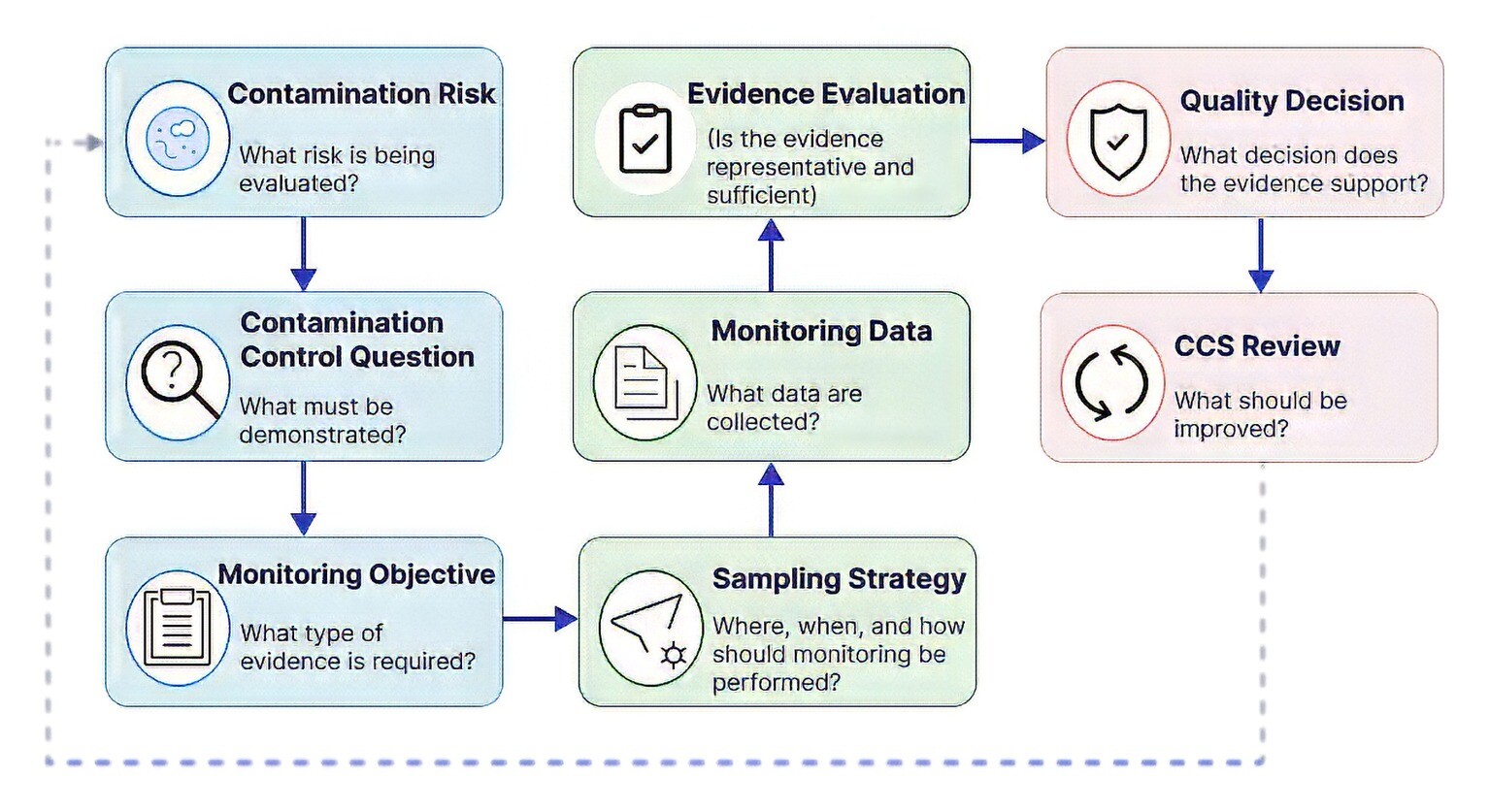
Figure 1. From Contamination Risk to Quality Decision: A Decision-Based Framework for Environmental Monitoring.
Within this framework, the contamination control question guides every element that follows. The relationship between the question, the monitoring approach, the evidence generated, and the resulting quality decision should be explicit and scientifically justified.
What Should Be Documented Before Using One EM Activity to Replace Another
Before using one monitoring activity to fulfill the objective of another, the site should document a scientific rationale addressing the questions in Table 2 below. If these questions cannot be adequately addressed for a proposed substitution, there may be insufficient scientific justification to consider the monitoring activities equivalent for the intended purpose.
Table 2. Questions to Address Before Monitoring Substitution |
|---|
Evaluation Criterion | Question to Answer |
|---|
Original monitoring objective | What contamination control question was the original monitoring designed to answer? |
Contamination risk | What contamination sources and pathways is the original monitoring representative of? |
Operational state | Under what process conditions was the original monitoring intended to be performed? |
Evidence gap | Does the proposed replacement generate evidence of the same type, under equivalent conditions? |
Limitations | What does the replacement not capture that the original activity would have captured? |
Quality decision impact | How does the evidence gap affect the scientific justification of the quality decision? |
A Practical Example: Shutdown Monitoring and the Routine Dynamic Requirement
A manufacturing area operates under a routine dynamic EM program requiring monitoring during production on a weekly basis. A planned shutdown occurs; maintenance, deep cleaning, and environmental restoration take place over several days. Static monitoring is performed following restoration. Results are satisfactory.
Can the static monitoring fulfill the weekly dynamic monitoring requirement?
Table 3 applies the framework presented in Table 2 to a common shutdown monitoring scenario.
Table 3. Application of the Monitoring Substitution Framework: Shutdown Scenario |
|---|
Evaluation Criterion | SHUTDOWN SCENARIO ASSESSMENT |
|---|
Original monitoring objective | Is the manufacturing process currently operating under controlled conditions? |
Contamination risk | Personnel activity, equipment interactions, aseptic technique, and interventions associated with routine production |
Operational state | Occupied, active process |
Evidence gap | Static post-shutdown monitoring is performed in an unoccupied area with no process activity; therefore, it does not represent the same operational state or contamination risk profile as routine dynamic monitoring |
Limitations | Static monitoring does not capture personnel-generated contamination, airflow disruption from interventions, or process-generated particulates |
Quality decision impact | The state of control during routine production cannot be determined from static data collected in the absence of the process activity |
The conclusion is not simply “no.” The questions differ, the operational states differ, and substitution should not be assumed to be scientifically justified without a documented rationale demonstrating that the alternative monitoring provides equivalent evidence for the intended contamination control question.
The static monitoring is entirely appropriate for its own question – did environmental restoration return the area to an acceptable condition prior to restart? That is a legitimate and distinct contamination control question, and the static results address it well. Shutdown monitoring addresses one question. It does not simultaneously address a different question simply because it was performed in the same classified space.
This framework does not imply that substitution is categorically impossible. It proposes that any substitution should be supported by documented analysis demonstrating that the alternative monitoring addresses the intended contamination control question under a sufficiently comparable risk profile and provides the type of evidence needed for the resulting quality decision. The analysis should be explicit, rather than assumed.
Conclusion
Environmental monitoring programs designed around schedules, frequencies, and classification requirements – without an explicit record of what contamination control question each activity answers – can contain a scientific gap. That gap may remain invisible under normal operating conditions. It becomes consequential precisely when a substitution is made, a quality decision is challenged, or a deviation requires a defensible investigation.
Not all acceptable EM data are decision-relevant EM data.
The design of a monitoring program is not primarily a question of how many samples to collect or where to place them. It is a question of what contamination control questions must be answered, what information is required to answer them, and whether the monitoring activities selected are genuinely representative of the contamination risks they are intended to evaluate – under the specific process conditions for which the corresponding quality decision applies.
Environmental monitoring activities should not be assumed to be interchangeable because contamination control questions are not interchangeable. Different contamination control questions require different information. Environmental monitoring exists to generate that information.
References
- European Commission. EudraLex, Volume 4: EU Guidelines for Good Manufacturing Practice for Medicinal Products for Human and Veterinary Use, Annex 1: Manufacture of Sterile Medicinal Products; European Commission; 2022.
- International Council for Harmonisation of Technical Requirements for Pharmaceuticals for Human Use. ICH Harmonised Guideline Q9(R1): Quality Risk Management. ICH; 2023.
- Parenteral Drug Association. Technical Report No. 13 (Revised): Fundamentals of an Environmental Monitoring Program. Parenteral Drug Association; 2014.
About the Author
Irina Pototskaia has worked in sterile pharmaceutical manufacturing for more than 15 years in roles spanning microbiology, quality assurance, Qualified Person responsibilities, and quality management. Her experience includes sterility assurance, contamination control, regulatory inspections, and pharmaceutical quality systems. She is interested in practical solutions that strengthen contamination control and improve quality decision-making.